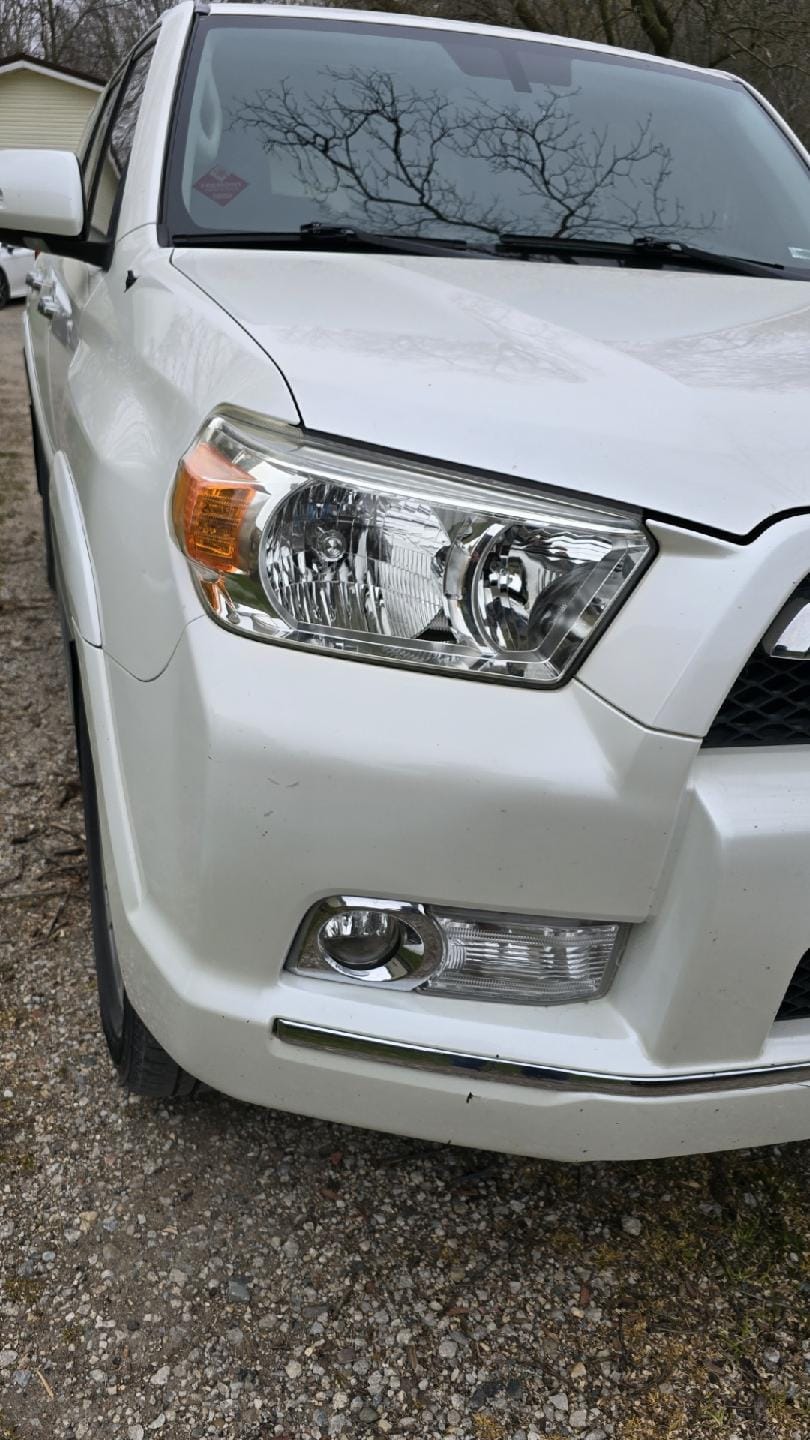
This 2022 Audi A4 in Mythos Black came to us with a situation that's unfortunately common on dark-colored vehicles: three years of automated car wash swirls, two-bucket wash scratches from an enthusiastic previous owner, and a handful of water spots that had etched into the clear coat. In direct sunlight, the paint looked like a spiderweb.
The owner wanted the car corrected and sealed before winter. The goal was to remove as much as possible without going too aggressive — Audi's factory clear coat on this generation is on the thinner side, and we always take paint depth measurements before any correction work to understand exactly how much we have to work with.
"I knew it was bad, but I didn't realize how bad until he showed me under the light. It looked perfect in my garage — total different story outside."
Pre-Inspection and Paint Depth
Before touching the car, we do a full inspection under high-intensity halogen lighting to map the paint condition. We're looking for the severity of swirl marks and scratches, any deeper single-track scratches that may not be correctable, paint chips and rock strikes, and panel-to-panel color variation that might indicate previous body work.
We then take paint thickness readings across every panel using a digital paint depth gauge. This tells us how much clear coat is present and how much room we have to work. Factory spec for Audi clear coat on this generation is typically 40–60 microns. After reading this car, we had adequate depth across most panels, with a few low spots on the hood and driver's door that required a lighter approach.
The Decontamination Wash
Paint correction can't start on a contaminated surface. Before any polishing, we run the car through our decontamination process:
- Pre-rinse to remove loose surface dirt
- Snow foam pre-soak with a pH-neutral foam cannon
- Hand wash using the two-bucket method with grit guards
- Iron decontamination spray (turns purple on contact with iron particles — brake dust, industrial fallout)
- Clay bar treatment to remove bonded contaminants that washing doesn't lift
- Panel wipe with an IPA (isopropyl alcohol) solution to strip any remaining residue
After decontamination, the paint is chemically clean and ready for correction. You'd be surprised how much contamination you find on a "clean" car.
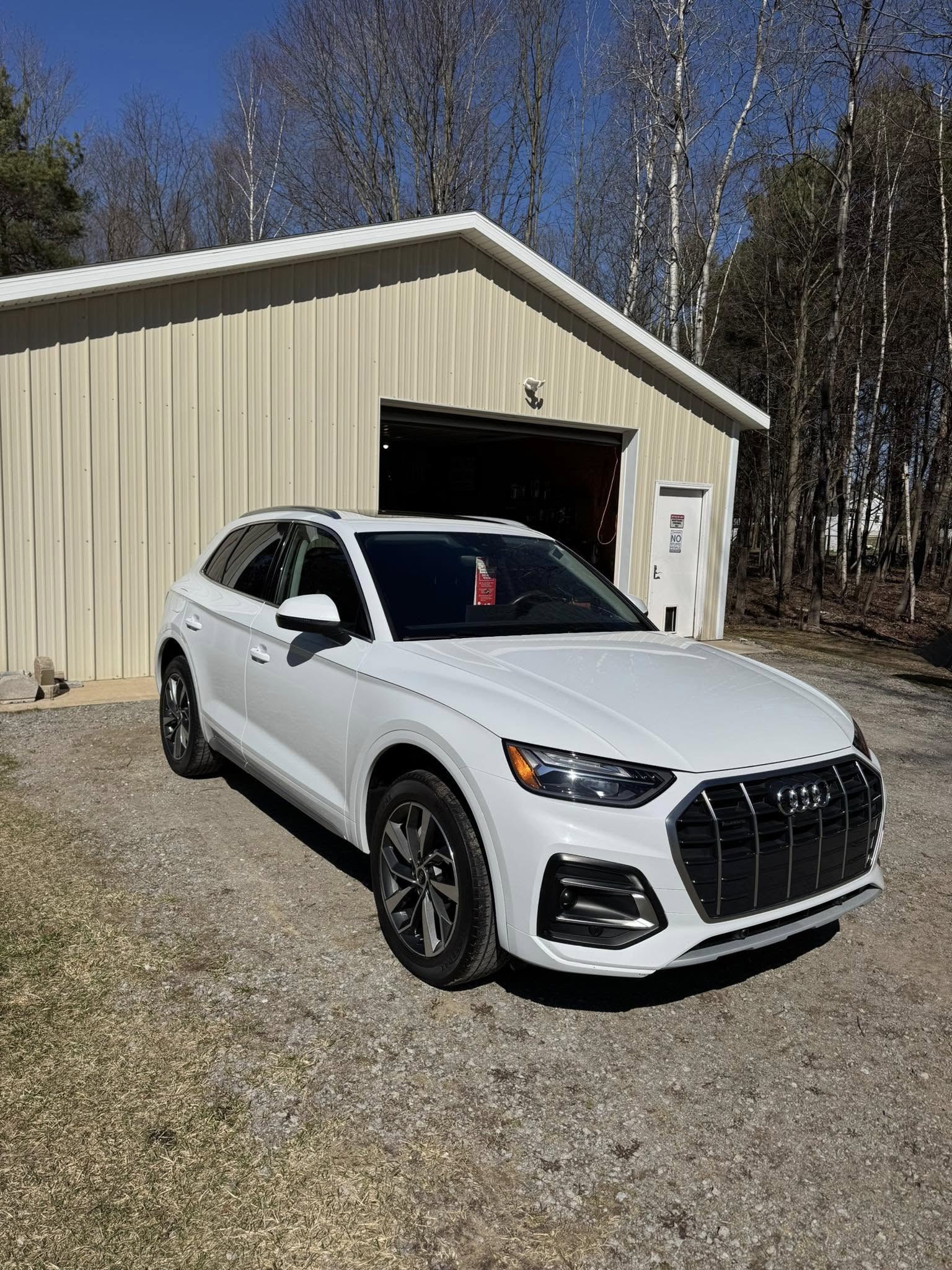
Panel by panel after the first correction stage — the difference in gloss is already visible.
Stage 1: Compounding
The first polishing stage uses a medium-cut compound on a foam cutting pad. This is the heavy lifting — removing the bulk of the swirl marks and scratches by cutting down the clear coat to below the defect depth. We work in small sections (roughly 2 feet by 2 feet) at a time, checking our work under inspection lights before moving on.
On this car, we used 4 passes per section with a light, even pressure, working in overlapping horizontal and then vertical passes. The defect removal at this stage was approximately 70–80%. The paint looked significantly better, but had a hazy appearance from the compound scratches — that's normal and expected at this stage.
Stage 2: Finishing Polish
The second stage uses a finer finishing polish on a softer finishing pad. This removes the haze and micro-marring left by the compounding stage and brings out the full gloss and depth in the paint. This is where the paint transforms from "noticeably better" to "mirror finish."
We follow the same panel-by-panel process, checking under direct light at multiple angles. Black paint is unforgiving — any remaining polish residue or missed sections are immediately visible under the right lighting.
Protection: Paint Sealant
After correction, we applied a high-durability synthetic paint sealant. The owner opted for sealant rather than ceramic coating at this stage, with the plan to do a full ceramic once he moves to a garage situation. The sealant provides 6–12 months of protection and is ceramic-compatible when the time comes.
Application was done panel by panel using a foam applicator, followed by cure time and removal with a clean microfiber. The sealant enhances the gloss from the polish and adds a layer of chemical and UV protection.
Final Result
The total defect removal on this car was approximately 85–90% — exceptional for a vehicle with this level and variety of defects. The remaining 10–15% consisted of a few deeper single-track scratches that would have required removing too much clear coat to eliminate completely.
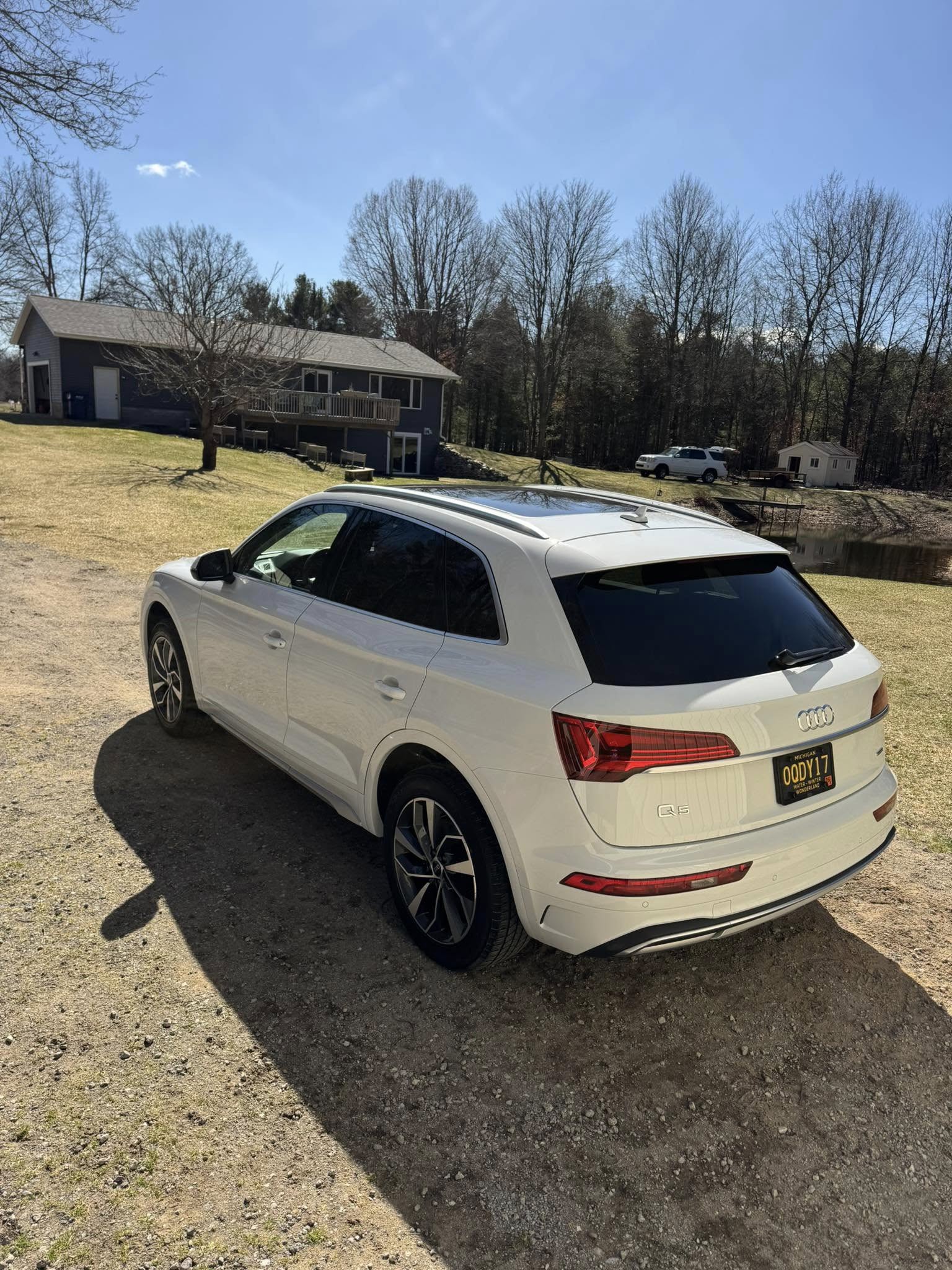
The final result under direct afternoon sun. Zero swirl marks visible.
The owner's reaction was exactly what we aim for — "I didn't know it could look like that." That's the goal every time.
How to Maintain It
After paint correction, the way you maintain the car matters more than ever. Our recommendations:
- Never use an automated car wash with brushes or spinning cloth
- Use the two-bucket method with fresh, clean mitts for every wash
- Dry with a clean, soft microfiber or a leaf blower
- Avoid washing in direct sunlight or on a hot surface
- Re-apply sealant or quick detailer every 3–6 months
Corrected paint maintained properly will hold its finish for years. We're happy to walk you through our maintenance recommendations at drop-off.